Rosemary Hair Oil: Does It Work?
Rosemary oil is all over hair care right now. Scroll any hair video, and someone is telling you it regrew their edges or fixed their shedding. So does it actually work, or is it just another trend? The honest answer is somewhere in the middle. There is real science behind it. One proper study compared it with a well-known hair loss treatment. But it is not a miracle cure. And it does nothing if you use it wrong. This guide walks through what rosemary oil really does, how to use it safely, and the one rule you must never break.

What rosemary oil is
Rosemary oil comes from the leaves of the rosemary plant. It is the same herb you cook with, but the essential oil is far stronger than the plant. It is made by steam-distilling the leaves. The result is a clear, sharp-smelling oil packed with strong plant compounds. That strength is why it works. It is also why it needs care. You never put it on your scalp straight from the bottle. It always goes into a carrier oil first, like jojoba, coconut, or argan oil. The carrier oil dilutes it and helps it spread. Think of the carrier oil as the taxi and the rosemary oil as the passenger.
What it actually does
Here is the study everyone quotes. In 2015, researchers ran a six-month trial with 100 people who had pattern hair loss. Half used rosemary oil. Half used minoxidil 2%, a standard hair loss treatment. After six months, both groups had more hair. There was no real difference between them. The rosemary group also had less scalp itching. That is a genuine result. It is why rosemary oil gets taken seriously. But keep the full picture in mind. It was one study, with 100 people. It tested pattern hair loss, not every kind of shedding. Rosemary oil works by improving blood flow to the scalp. Better flow brings more oxygen and nutrients to the follicles. Its antioxidant compounds also help calm irritation. It does not regrow a bald patch overnight. It does not fix shedding caused by illness, hormones, or a new medicine. If it works for you, expect slow, steady change over months, not days.
How to use it
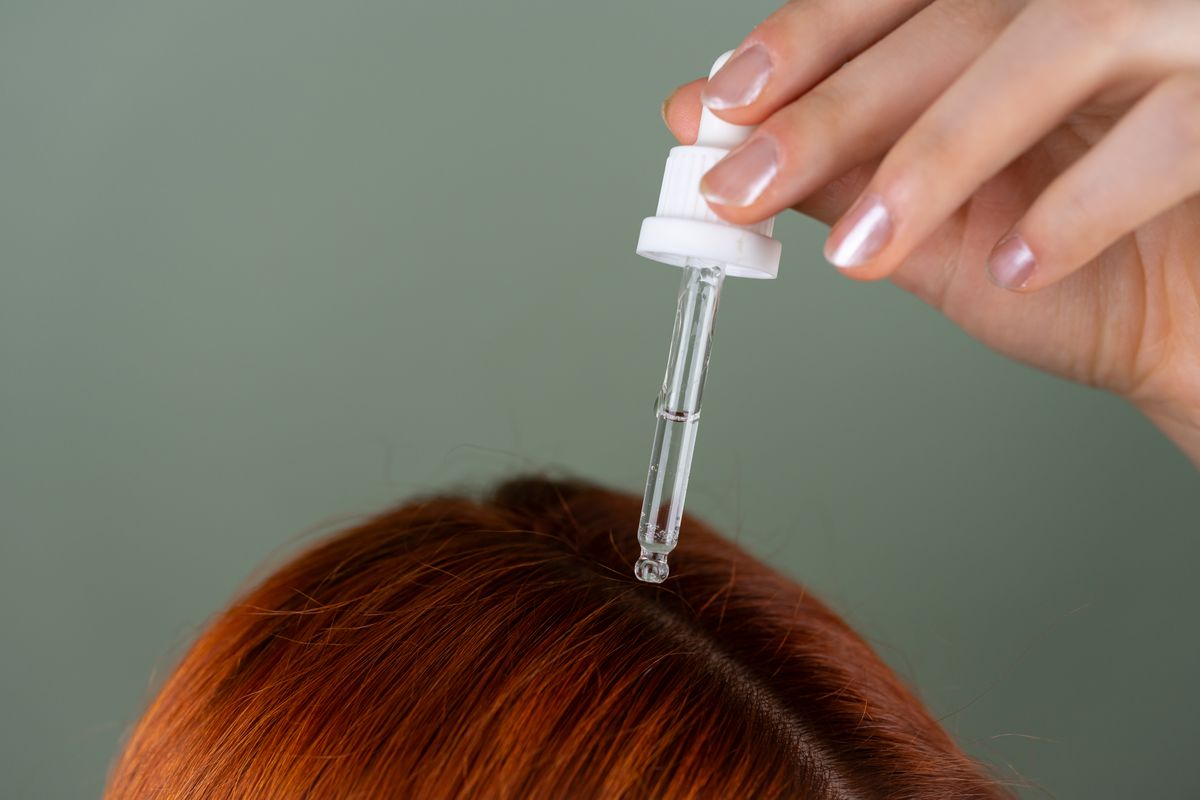
The routine is simple. The safety rules matter more than the routine itself. Mix 3 to 4 drops of rosemary essential oil into 2 tablespoons of warm carrier oil, like jojoba, coconut, or argan. Part your hair into sections. Massage the mix into your scalp with your fingertips for 3 to 5 minutes. Leave it on for 30 minutes, then wash it out with a mild shampoo. Do this 2 or 3 times a week. Be patient. Hair grows slowly, and no oil can speed up that clock by much.
Details:
- Never use rosemary essential oil undiluted; it can burn and irritate the scalp
- Patch test first: try a little of the mix on your inner wrist and wait 24 hours
- Skip rosemary oil completely if you are pregnant. Check with your doctor if you breastfeed or take regular medicine
- Leave it on for 30 minutes, then wash it out. Do not leave it on overnight
- Massage with fingertips, not nails, and keep it away from your eyes
The DIY rosemary rinse
If you want something gentler, try a rosemary rinse. It is the same herb, just much weaker, so it is a good first step. Steep 2 tablespoons of dried rosemary in 1 cup of boiling water for 30 minutes. Then let it cool and strain it. After shampooing, pour the rinse over your hair and scalp. Massage it in for a minute, and rinse it out with cool water. Use it once or twice a week. It will not do what the oil does. But it leaves hair soft and shiny, and it smells lovely.

Details:
- Make it fresh each time; it goes off within a day
- Strain it well, so no leaf bits stay in your hair
- If you add essential oil, keep it to 2 or 3 drops in the whole cup, never more
What to skip
A few mistakes can turn a good remedy into a bad week for your scalp.
- Undiluted rosemary oil on your scalp, ever
- Daily use. 2 or 3 times a week is enough; more can irritate
- Leaving it on overnight
- Using it on a cut, sore, or inflamed scalp
- Swallowing it; it is for outside use only
- Expecting fast results. Real change takes months
When to see a dermatologist
Rosemary oil is for everyday care, not for treating a real problem. See a dermatologist if your hair is falling out suddenly, in clumps, or in patches. Shedding that started after pregnancy, an illness, or a new medicine needs a professional, not an oil. And if your scalp is painful, red, or scaly, or the itching will not stop, get it checked before you try any new treatment.

Quick recap
- Rosemary oil can help. One six-month study found it worked as well as minoxidil 2% for pattern hair loss, with less itching.
- Always dilute. 3 to 4 drops in 2 tablespoons of warm carrier oil, never neat.
- Patch test on your inner wrist, wait 24 hours, and skip it if you are pregnant.
- Massage it in, leave it for 30 minutes, and wash it out 2 or 3 times a week.
It is a slow, steady helper, not a quick fix. Give it months, not days.
Pin this guide for later. Your rosemary routine starts with one small bottle.


Comments